
Assessing Your Hair’s Condition
Thin hair demands extensions that enhance volume without causing stress on delicate strands. Evaluate density by checking scalp visibility and ponytail circumference under four inches signals the need for lightweight additions. Test elasticity by stretching a strand to identify brittleness from prior chemical treatments. Consult professionals for scalp conditions like thinning from hormonal changes. This foundation guides selections that blend seamlessly and promote healthier growth cycles.
Types of Hair Extensions for Thin Hair
Clip-in extensions suit thin hair best due to their removable nature and minimal commitment. Choose sets with four to six clips per weft for even distribution rather than bulky full-head packs. Tape-in methods work well when applied by experts using no more than 20 pieces of 1.5-inch width to avoid tension. Halo extensions add instant length and body through a single wire crown without any bonding. Avoid sew-in or fusion techniques that pull on fine roots and lead to fallout. Micro-ring options provide adjustable hold but limit to 50 grams total weight per session.
Material Quality Considerations
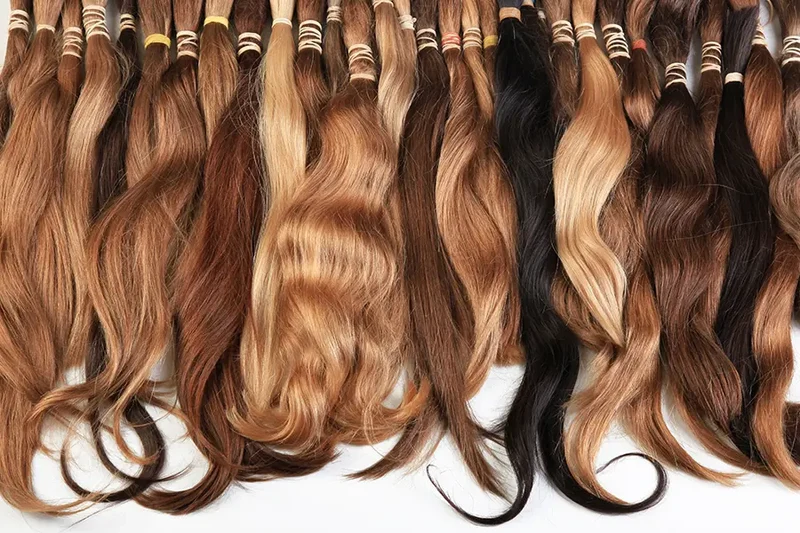
Opt for 100% Remy human hair extensions for thin hair to ensure cuticle alignment and natural movement. This material accepts color and heat styling like your own strands unlike synthetic fibers that tangle easily. Select virgin hair without prior processing for superior softness that mimics fine textures. Check for single-donor sourcing to prevent matting. European or Asian-sourced Remy variants often match thin hair’s fine diameter better than coarser Indian options. Verify ethical sourcing through certifications for long-term durability lasting up to one year with proper care.
Weight and Volume Balance
Prioritize extensions under 150 grams total to prevent flattening thin hair further. Layer multiple thin wefts instead of one heavy piece for gradual volume buildup. Look for air-light constructions with fewer bonds per section. Test by holding the pack; anything feeling dense will drag roots down. Volume-focused lines designed specifically for fine hair incorporate shorter lengths at the crown for lift. Balance added length with density by keeping extensions no more than two inches longer than natural hair.
Color Matching and Texture Blending
Match extensions to your root color first then blend mid-lengths and ends for dimension. Use swatches under natural light to capture undertones like ash or golden hues common in thin hair. Select straight or loose wave textures that lay flat without adding bulk. Avoid tight curls that contrast and highlight sparseness. Multi-tonal pieces create illusion of thickness through strategic placement near the part. Professional color matching services ensure invisible transitions especially when roots show through fine strands.
Attachment Methods and Safety
Apply tape-ins horizontally below the crown using medical-grade adhesive safe for sensitive scalps. Space pieces two centimeters apart to allow airflow and reduce irritation. Clip-ins require teasing at the base for grip without clips pulling follicles. Always remove extensions nightly if using temporary types to let hair breathe. Monitor for redness or shedding after initial wear and adjust tension immediately. These methods minimize damage while maximizing hold for active lifestyles.
Maintenance Routines
Wash extensions two to three times weekly with sulfate-free shampoo formulated for fine hair. Apply conditioner only to mid-lengths avoiding roots to prevent slippage. Air dry on low heat or use a diffuser on cool setting. Store clip-ins in silk bags to maintain shape. Schedule professional readjustments every six to eight weeks for semi-permanent styles. Deep condition natural hair weekly with lightweight masks containing biotin to strengthen alongside extensions. Rotate usage days to give follicles recovery time.
Avoiding Common Pitfalls
Steer clear of over-processing extensions with bleach that weakens already fine fibers. Never sleep with wet hair as it causes matting and breakage. Skip heavy styling products like gels that weigh down the style. Test for allergies to adhesives before full application. Purchase from reputable suppliers to avoid low-quality blends that shed excessively. Track wear time and replace when tangling begins to protect overall hair health.