
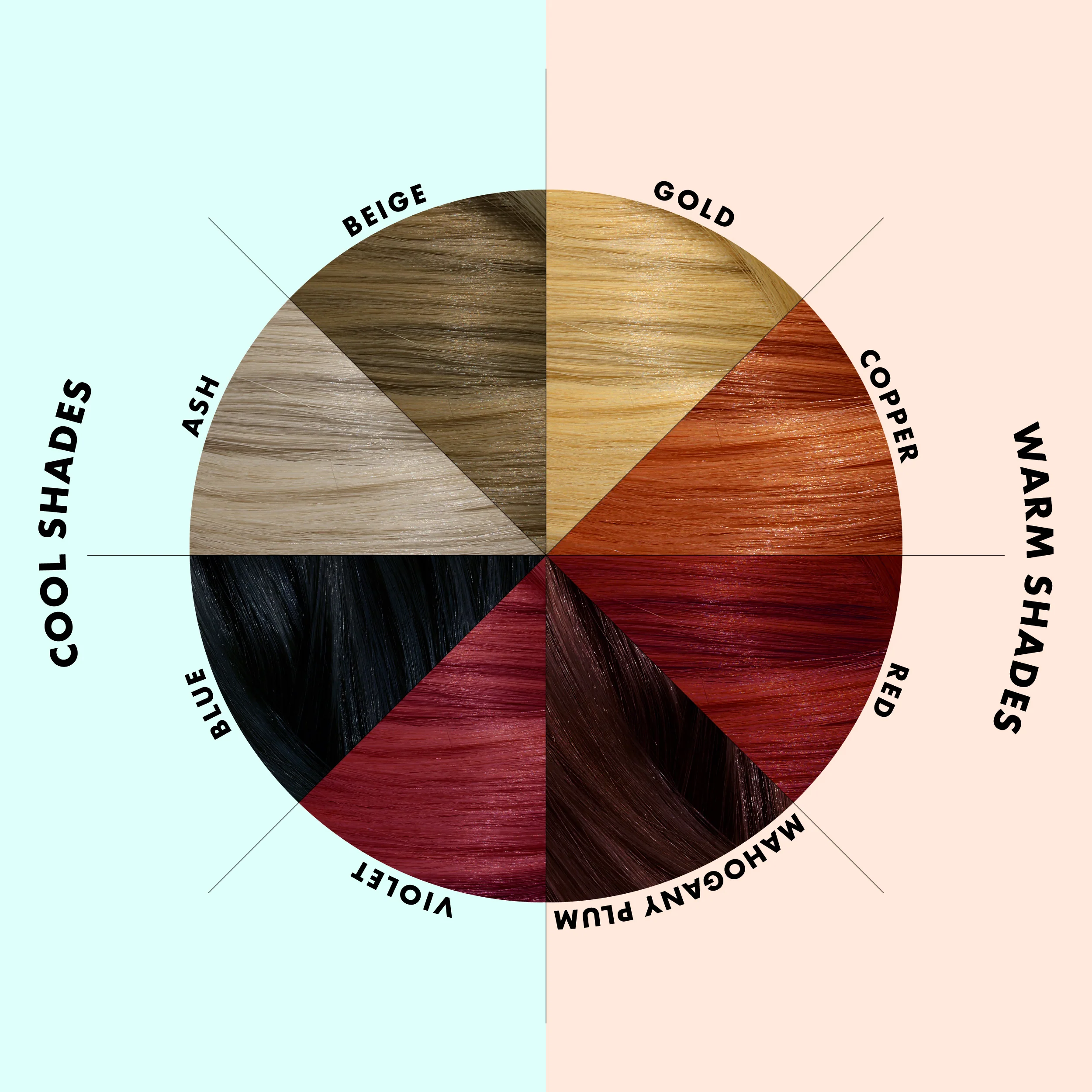
The hair color wheel functions as a practical guide for selecting and combining shades during hair dyeing by mapping primary, secondary, and tertiary hues in a circular format. Primary colors include red, yellow, and blue, which cannot be created by mixing other pigments and form the foundation for all hair dye formulations. When these primaries blend, they produce secondary colors such as orange from red and yellow, green from yellow and blue, and violet from blue and red. Tertiary colors arise from further mixing, yielding tones like red-orange or blue-green that appear frequently in natural hair variations and dye lines.
Primary Colors and Their Role in Hair Dyeing
Red serves as a warm base that adds vibrancy but can intensify unwanted brassiness if overapplied. Yellow contributes brightness and lift, often appearing in lighter blonde results after bleaching. Blue acts as a cool anchor that deepens shades and counters warmth. Stylists reference these primaries when formulating custom mixes for clients seeking precise results, such as achieving ash tones on previously highlighted hair. The wheel positions these colors opposite their complements to highlight neutralization potential.
Secondary and Tertiary Colors on the Wheel
Orange emerges as a common secondary tone in hair that has been lightened, requiring blue-based dyes for correction. Green appears rarely but neutralizes red undertones in certain fashion colors. Violet, or purple, counters yellow brassiness effectively in blonde maintenance routines. Tertiary shades like red-violet help refine magenta-based dyes, while yellow-green assists in balancing olive tones on darker bases. This arrangement allows quick visual assessment of which dye additives will shift a formula toward desired cool or warm directions without trial and error.
How the Hair Color Wheel Guides Color Correction
Complementary colors sit directly across from each other on the wheel, enabling targeted neutralization during dyeing. For instance, applying a blue-based toner cancels orange brass on level six hair, restoring a neutral beige result. Purple additives eliminate yellow in level eight or nine blondes, producing silvery finishes popular in balayage services. Green counters red in vibrant fashion applications, though overuse risks muddy outcomes. This method reduces processing time and chemical exposure by predicting interactions before the dye contacts the hair shaft.
– Apply the wheel after strand testing to confirm underlying pigment levels. – Mix small batches using equal parts of complementary shades for even distribution. – Consider hair porosity, as porous strands absorb cool tones faster than warm ones.
Practical Examples of Wheel Application in Dyeing Sessions
A client with brassy level seven hair benefits from a violet-blue mix drawn from opposite wheel positions to achieve ash blonde. Red-based fashion colors on previously orange-treated hair require green-blue correctors to mute warmth before the final shade application. Dark brown dyeing sessions use the wheel to add subtle blue for richer depth rather than flat black results. Multi-tone looks, such as rose gold, combine red and violet segments while avoiding direct opposites that would cancel vibrancy.
Factors Influencing Wheel Effectiveness During Dyeing
Underlying pigment exposed during lightening dictates which wheel section receives focus first. Porosity levels affect how quickly tones deposit, with damaged hair grabbing blue-violet faster and potentially turning green if left too long. Developer strength alters lift and deposit rates, shifting expected outcomes from the wheel diagram. Multiple sessions spaced two weeks apart allow better control when correcting complex color builds.
Advanced Techniques Using the Hair Color Wheel
Layering involves applying a base from one wheel quadrant then adding accents from adjacent sections for dimension. Pre-pigmentation uses the wheel to restore missing warmth before cool toning, preventing flat results on over-lightened hair. The wheel also supports formulation ratios, such as one part blue to two parts violet for specific ash formulas. Professionals track client history against wheel predictions to refine future applications and minimize damage from repeated corrections.
Choosing the Right Hair Color Wheel Format
Physical wheels printed on durable cards offer quick reference in salon settings, while digital versions integrate with inventory software for shade matching. Some wheels include level indicators from one to ten alongside hue positions for comprehensive planning. Matte versus glossy finishes on printed wheels affect visibility under salon lighting, influencing accuracy during rushed consultations. Updated wheels from major manufacturers incorporate current fashion shades like teal or lavender for expanded creative options.